AI Automation and Agents
The repetitive work your team does every day, handed to AI agents and workflows that run inside the systems you already use, piloted on one process and measured before anything is rolled out.
Fixed scope and price agreed up front. No obligation after the call.
- You own 100% of the code
- Fixed scope and price up front
- Not happy after milestone one? Walk away, owe nothing
Work like this, already shipped
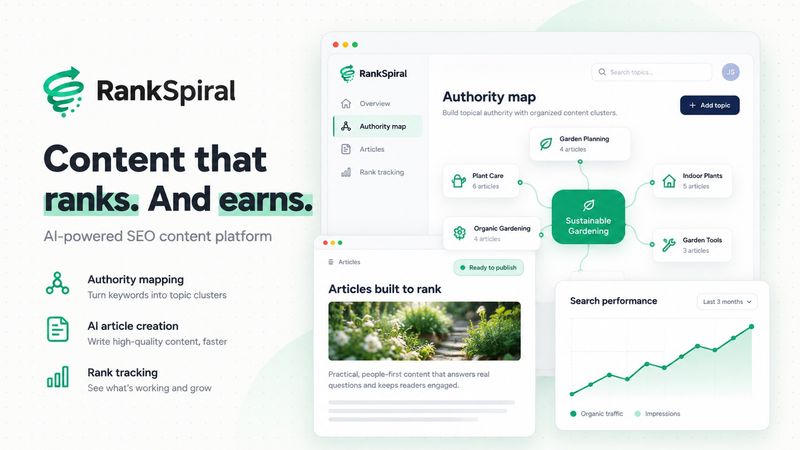
RankSpiral
RankSpiral is an AI SEO content platform that plans, writes, and publishes articles built to rank and earn, held to a copywriter's editorial standard.
View project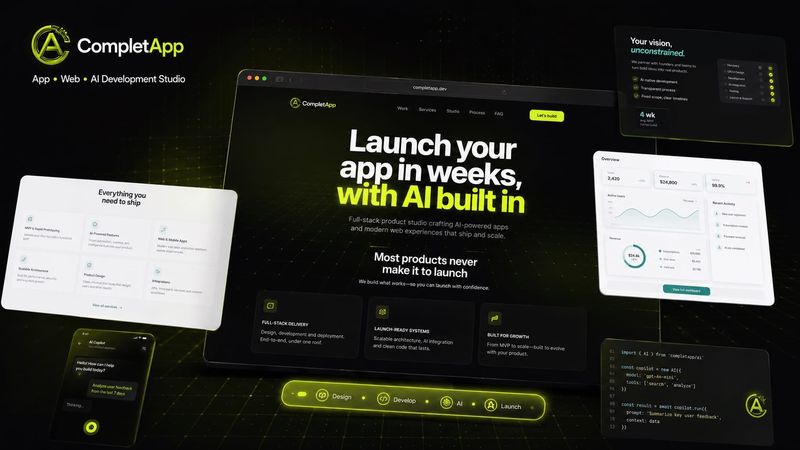
CompletApp
Our own Astro portfolio website: a fully static, bilingual studio site engineered for speed and technical SEO from the ground up.
View projectWhat you get
- The one process worth automating first, chosen with you
- AI agents and workflows connected to the systems you already run
- A pilot on real inputs, measured against how the work is done today
- A person in the loop wherever a mistake would cost money
- Fixed scope and fixed price agreed before we start
- Code, workflows and prompts you fully own
What does an AI automation consultant do?
An AI automation consultant finds the repetitive work in a business that AI agents and workflow tools such as n8n, Make or Zapier can take over, then builds those automations into the systems the company already runs. It is for businesses whose staff lose hours to copying data, sorting requests or writing the same replies, and who want a measured pilot before a wider rollout. CompletApp is a Budapest-based product studio that delivers it in Hungarian and English, to a fixed scope and a fixed price.
In most businesses the expensive part is not the hard work. It is the same small task done forty times a day: reading an email to decide who should handle it, copying an order from one system into another, typing figures off a PDF, writing the reply that was written yesterday.
That work is where AI agents and workflow tools pay off, because it follows a pattern a machine can learn and a person can check. We find it, automate it inside the tools you already use, and prove it on one process before it touches the rest of the business.
What we automate
Our AI agent development services start from the work, not from the tool. What we build most often takes one of these shapes:
- Inbox and request triage: every message read, labelled and routed.
- Data between systems: an order, a lead or a booking entered once.
- Documents to data: figures pulled from invoices, orders and forms.
- Drafted replies: a first answer written for a person to approve.
- Recurring reports: the weekly summary assembled on its own.
- Internal assistants: answers and actions over your own data, through MCP.
If you want to hire an AI developer for one process rather than a team for a year, this is the shape of that job. When the AI has to live inside a product your customers use, that is AI integration instead.
The closest example we can show is our own publishing. Articles written in RankSpiral, where we set up the AI environment the writing process runs on, arrive at our own site by webhook, are committed to the repository and deploy with no manual step.
n8n, Make, Zapier or a custom agent?
We use both and pick per process. The short version:
| Workflow tool (n8n, Make, Zapier) | Custom agent (Claude or OpenAI) | |
|---|---|---|
| Best for | Fixed steps between well-known apps | Work that needs judgement or several decisions |
| Your systems | The connectors the tool offers | Any system with an API, or through MCP |
| Running costs | A monthly plan, often the cheaper route | Model usage, which grows with volume |
| Who can edit | Your team, in a visual editor | A developer, in code you own |
If the middle column covers your process, a workflow tool is the better choice, and we will build it there.
How a project runs
- Find the process worth automating. We look at how the work is done today and pick the task that costs the most hours or causes the most errors.
- Pilot. We automate that one process on real inputs, with a person checking the output wherever a mistake would cost money.
- Measure. We compare time spent and errors against the old way, so the decision to go further rests on numbers, not on a demo.
- Roll out. Once the pilot holds up, we extend it to the full volume and to the next process.
When not to automate
We will also tell you when not to. A process that changes every week, runs a few times a month, or has never been agreed on by the people doing it is not ready for automation. Neither is a task where a wrong answer would be costly and nobody would review it. Automating any of those adds a running cost and saves no time.
How we work
We agree the full scope and a fixed price up front, then deliver in short stages you can review. You get a direct line to the person building the automation, documentation your team can follow, and on full payment the code, the workflows and the prompts are yours.