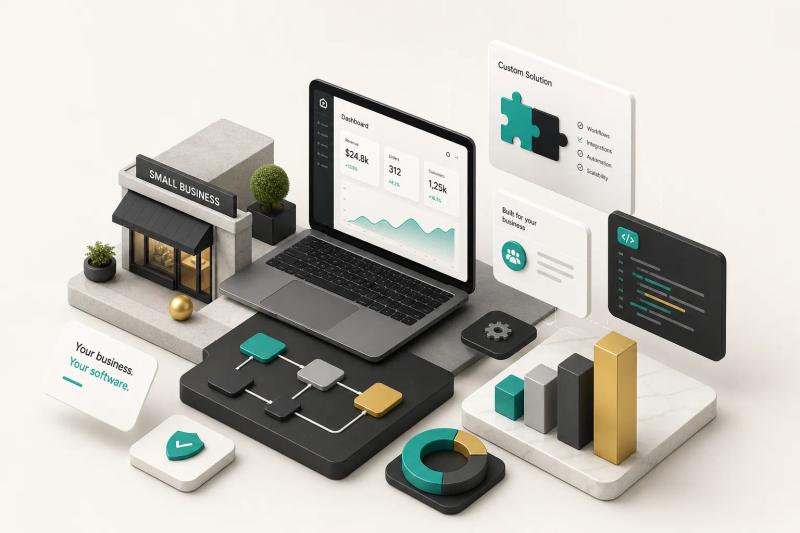
Internal Business Apps
The internal system your business actually needs, from orders and stock to scheduling, approvals and field apps, built around how your team works and wired into the software you already run.
Fixed scope and price agreed up front. No obligation after the call.
- You own 100% of the code
- Fixed scope and price up front
- Not happy after milestone one? Walk away, owe nothing
Work like this, already shipped
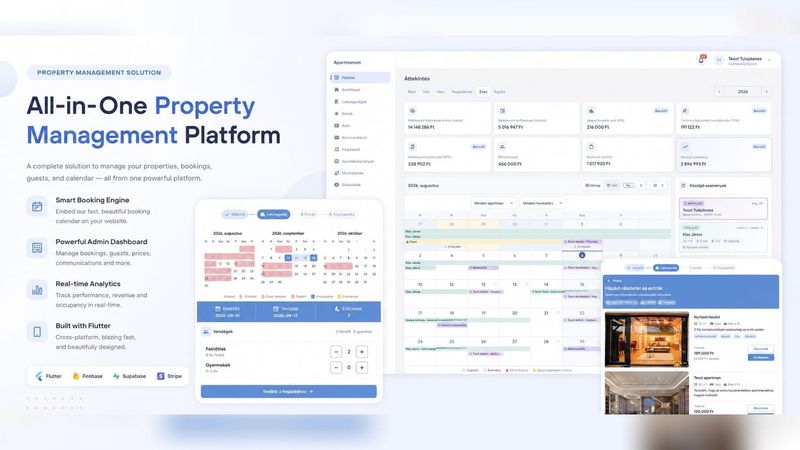
Apartmanom
A property management app for apartment hosts: calendar, bookings, invoicing and guest email, integrated with Hungarian invoicing systems, plus an embeddable booking widget.
View project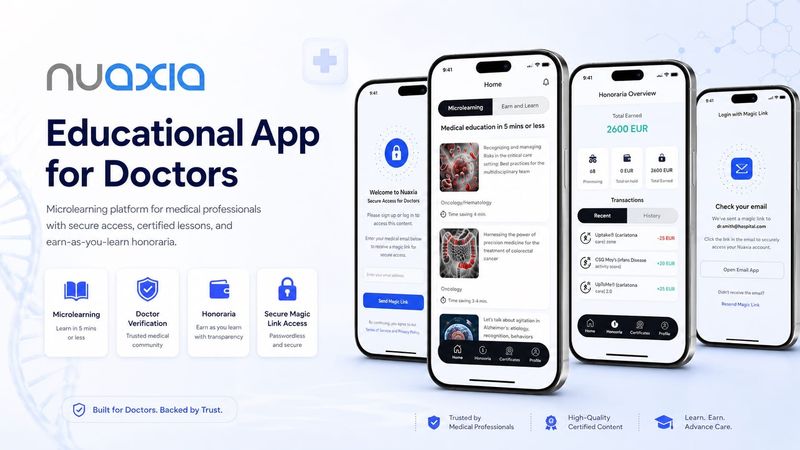
Educational App for Doctors
An anonymized medical education app built against the client proprietary backend, not a stock backend-as-a-service: microlearning for verified doctors, honoraria on course completion, rebuilt in FlutterFlow in 30 days.
View projectWhat you get
- An internal system shaped around how your company works, whatever the job
- Screens built for their users: fast at a desk, and one-handed when the work happens away from it
- Roles and permissions, so everyone sees exactly what their job needs
- One live view instead of three spreadsheets and a phone call
- A clean fit with the accounting, invoicing and other systems you already run
- Fixed scope and fixed price, and code you fully own
What is internal business app development?
Internal business app development means building custom software that a company's own staff log in to: order and job tracking, stock, scheduling, approvals, dashboards, field apps and the admin side behind them. It is for companies whose daily work no longer fits ready-made tools, and it connects to the systems the business already runs. CompletApp is a Budapest-based product studio that builds these in Hungarian and English, to a fixed scope and a fixed price.
Most businesses run on software that almost fits. The gaps get filled with spreadsheets, paper forms, subscriptions that do not talk to each other, and someone retyping it all at the end of the day.
We build the internal system that fits how your company actually works, whichever kind of system that turns out to be. It sits on top of the software you already use, so nobody has to abandon what the business runs on to get something better.
What we build
Internal software is not one product. It is whatever your team logs in to every day to get the work done. If your customers log in instead, that is web app development. What we build most often takes one of these shapes:
- Operations and orders: from request to done, one status.
- Stock and warehouse: what came in, what to reorder.
- Customers and sales: a pipeline shaped to how you sell.
- Scheduling and bookings: shifts, rooms, vehicles and equipment.
- Approvals: purchase requests, expenses and invoices.
- People and HR: onboarding, leave, training and work time.
- Reporting dashboards: several systems on one current screen.
- Field and on-site apps: the next job and a photo, on the spot.
If your process is not on the list, it is still the same kind of work: a way of working that deserves better than a spreadsheet.
Built for the people who use it every day
An internal tool succeeds or fails on the people who spend their day in it, so each screen is designed for its actual user. The person in the office eight hours a day gets fast common actions, search that finds things, and bulk edits instead of fifty clicks. The manager gets one live view of what is done, what is late and what needs a decision.
Staff away from a desk see the next job and the one action to take, in a tap or two. When the work calls for it, the app captures a photo, a barcode, a signature or a location, and keeps working without signal.
Two examples of what we build. A delivery driver app: the driver enters a document number and gets the delivery address back from the system your company already runs. A warehouse app: it scans barcodes, uploads photos, and works offline, syncing in the background once signal returns.
Roles and permissions decide who sees what. We have built this shape: the Apartmanom back office brings staff shifts into its operations calendar, and adds work-time entries, per-module permissions, and revenue and occupancy statistics.
Can it connect to the systems you already run?
Your existing software stays the source of truth. The new system reads from it and writes back to it through whatever it exposes, and the data it cannot hold, such as a photo from a job or a note on an order, lives in a store beside it, linked by the reference numbers you already use.
We have built exactly this. Apartmanom issues real Hungarian invoices through the Billingo and Számlázz.hu APIs, and has run real bookings and guest email at the client’s own properties since June 2026. A medical education app we rebuilt had to run against the client’s own proprietary backend rather than a stock backend-as-a-service. The detail of that layer, including what to do when your system has no API, is on the backend development and integration page.
Start with the process that costs you most
You do not need to replace everything at once, and you should not. We start with the one workflow that burns the most hours or causes the most errors, build that properly, and put it in front of the people who use it. The next module follows once the first one has earned its place, on the same data and the same permissions.
If you are a Hungarian SME, part of the build can be funded from the DIMOP Plusz programme. What is eligible in yours comes out of a free pre-screening. The details are on grant-funded development.
Should you buy an off-the-shelf tool or build custom?
We will also tell you when not to build. The short version:
| Off-the-shelf tool | Custom build | |
|---|---|---|
| Fit | You adapt to the tool | Built around how your team works |
| Cost | Per-seat fee that grows with headcount | Fixed price agreed up front, code you own |
| Your existing systems | Only the connections the vendor offers | Wired into the software you already run |
| Best when | The fit is close and seats stay affordable | Poor fit, many seats, or three subscriptions stitched by hand |
If the middle column describes you, buying is the better decision, and we will say so.
How we work
We start by watching the process as it runs today, because the spreadsheet, the paper form and the workaround in someone’s notebook are the real specification. Then we agree the full scope and a fixed price up front.
With an integration the discovery comes first: we look at what your system can actually expose before anyone quotes a number, because a price named before that is a guess. We deliver in reviewable stages, put it in front of the people who will use it early, and hand over clean, documented work you fully own.